
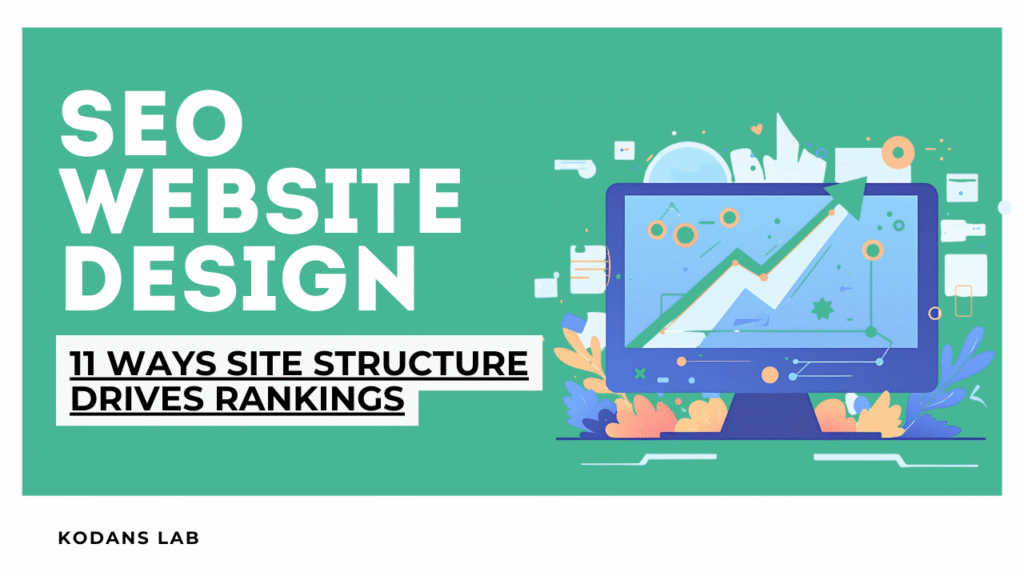
In the competitive world of online visibility, SEO website design has emerged as a crucial pillar for ranking success. Beyond high-quality content and backlinks, how your website is structured dramatically impacts search engine rankings and user experience. Understanding the interplay between site architecture and SEO can unlock powerful advantages for homeowners and businesses aiming to secure top positions on Google in 2025.
KodansLab offers an in-depth exploration of SEO Website Design: 11 Ways Site Structure Drives Rankings, revealing practical and proven strategies to optimize your website’s framework for maximum search impact.
What is SEO Website Design and Why Site Structure Matters
SEO website design encompasses both the aesthetics and technical layout of your website, focusing on how it is organized to support SEO best practices. Site structure specifically refers to how different pages and sections of your website interlink and are hierarchically arranged.
A well-designed site structure benefits SEO by:
- Facilitating easier crawling and indexing by search engines
- Improving user navigation and reducing bounce rates
- Distributing page authority effectively across important pages
- Enhancing content discoverability and contextual relevance
Google’s algorithms rely heavily on site structure signals to understand your website’s topical focus and prioritize pages in its rankings.
11 Ways Site Structure Drives Rankings in SEO Website Design
1. Flat Site Architecture Bottlenecks Authority
A “flat” site architecture means that most pages are reachable within just a few clicks from the homepage. KodansLab stresses that deep nested structures can dilute link equity and make crawling more difficult. Keeping URLs shallow and linked ensures faster indexing and better authority flow.
2. Logical Hierarchical Organization
Group related content into clearly defined topical categories and subcategories. This “silo” approach signals topical relevance to search engines and improves user experience by creating thematic pathways within your site.
3. Consistent and Descriptive URL Structures
URLs should be clean, descriptive, and consistent, reflecting site hierarchy (e.g., example.com/topic/subtopic). Well-structured URLs help search engines and users understand page content quickly.
4. Strategic Internal Linking
Internal links establish relationships between pages and distribute ranking power. KodansLab recommends linking high-authority pages to new or less visible pages and using keyword-rich anchor text relevant to the linked content.
5. Optimized Navigation Menus
Clear navigation menus categorized by user intent keep visitors engaged and reduce bounce, a behavioral signal important for ranking. Primary navigation should include essential pages, with dropdowns or mega menus for subtopics if well designed.
6. Comprehensive XML Sitemap Usage
An up-to-date XML sitemap submitted to search engines guides crawlers through your entire site structure, ensuring important pages are not overlooked and improving crawl efficiency.
7. Breadcrumb Navigation Implementation
Breadcrumbs improve site usability and help search engines contextualize a page’s position within the site’s hierarchy, often enhancing SERP appearance with rich snippets.
8. Mobile-First Responsive Design
With mobile searches dominating, Google prioritizes mobile-friendly sites. A responsive site architecture that adapts fluidly to all devices enhances user experience and boosts rankings.
9. Fast Loading Times Through Technical Optimization
Site structure directly affects load speed by influencing server requests and page rendering logic. Clean coding, minimized redirects, and content delivery networks (CDNs) keep your site fast and favored by search algorithms.
10. Avoidance of Orphan Pages
Pages without internal links (“orphan pages”) are hard for Googlebot to find and index. Ensuring every page is reachable via links prevents loss of potential ranking opportunities.
11. Use of Structured Data and Schema Markup
Incorporating schema helps search engines better understand content types and relationships on your page, increasing the likelihood of rich results and enhanced visibility.
Why KodansLab Recommends Investing in SEO Website Design
KodansLab has seen firsthand how clients benefit from a strategic overhaul focused on site structure—achieving higher rankings, improved traffic quality, and better engagement. Their SEO website design services emphasize:
- Comprehensive technical audits to diagnose structural weaknesses
- Customized site architecture plans aligned with business goals
- Implementation of advanced SEO techniques like silo structures, internal linking strategies, and schema integration
- Continuous monitoring and optimization adapting to evolving Google algorithms
Supporting Keywords to Enhance SEO Diversity
Integrate alongside the main keyword “SEO Website Design: 11 Ways Site Structure Drives Rankings” complementary phrases such as:
- SEO-friendly site architecture
- Website navigation for SEO
- Internal linking strategies SEO
- Mobile SEO design
These enrich keyword relevancy across search queries and improve overall SEO strength.
Conclusion
SEO Website Design: 11 Ways Site Structure Drives Rankings is a foundational element for digital success in 2025. Thoughtful organization and architecture of your website not only delight visitors but also earn Google’s trust and higher rankings. Partnering with KodansLab ensures your website is crafted with SEO precision, maximizing your visibility and business growth in an increasingly complex online search landscape.
Optimize your site structure now to dominate rankings and provide exceptional user experiences tomorrow.